Pages

Showing posts with label RPG. Show all posts

Tuesday, March 29, 2022

A man named Augusts visits San Sibelia

I just finished my first journaling game after being curious about the genre for quite a few years. It was a fun exercise and really gets the creativity flowing. The game i played was A Visit To San Sibilia by Peter Eijk. The game had realy simple instructions, a card mechanic to throw some curveballs into the narrative and an (optional) dice mechanic to regulate the flow of time. I played through it in just about two hours i think, i did it in two different session (last session started with Day 17).
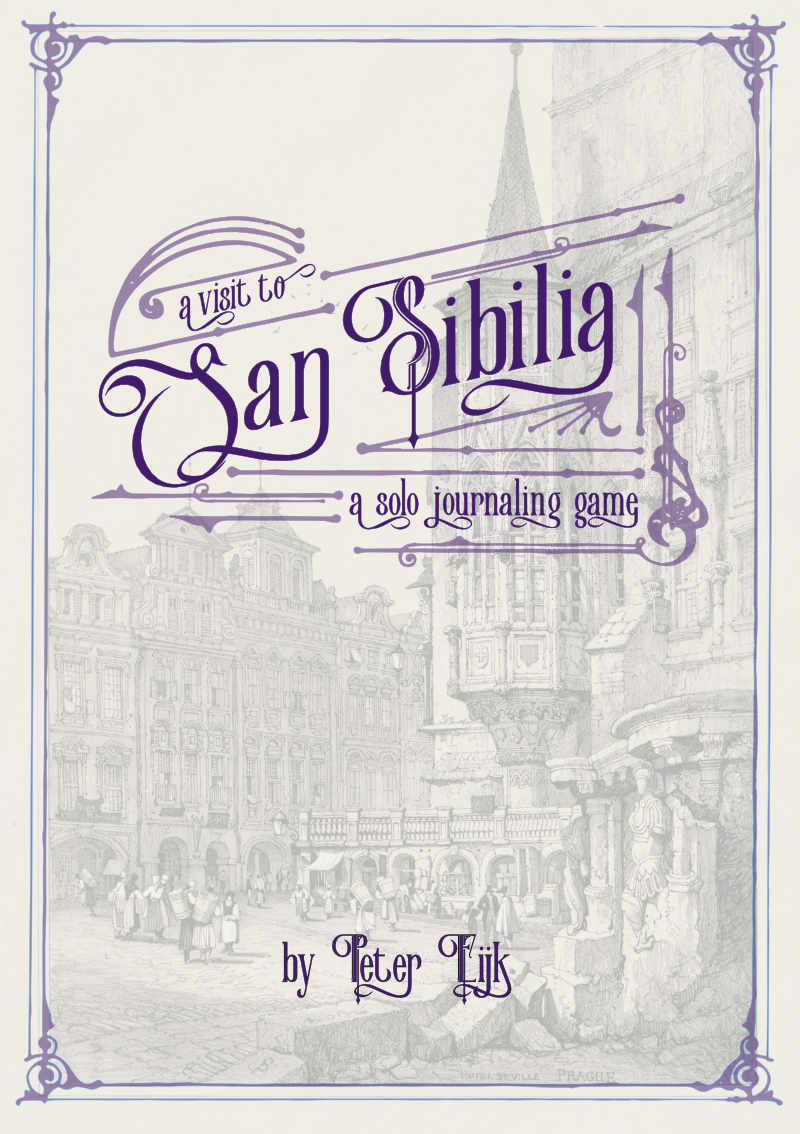
Game cover image

Below is what i wrote for the game. I've resisted editing the text, execpt to fiz few typos, to preserve the flow-of-consciousness feeling of the writing-as-playing exercise. I apologize if that makes it hard to read in places. 

A Visit To San Sibilia

Character name: Augustus Guinn

The city changes boxes: [x][x][x][x]

Day1

I have finally arrived in San Sibilia. My steamer arrived upriver early this morning and i took a tram, not too crowded fortunately, into the city center of Saint Riocha. I have walked around for a bit. The temple structures here are amazing. Like nothing I've ever seen. Their architecture appears ancient, yet still very new and completely unknown to me. My hotel is on the outskirts of the Saint Riocha district. A smal hotel, like i prefer, run by an elderly woman and her two sons. My room faces the river and i can see across to the workmen's districts across the flowing waters.

I have unpacked the diary of von Emmingen, but not had the inclination of opening it yet. The old man man's words are what brought me here, but reading his writing is still cumbersome although his genius is uncontested. Hopefully i'll get to reading it in the next day or so. Perhaps i'll be able to find someone in this city who knew him and can she light on his destiny. I arrived here alone, of course, and i'm not very good with people, but my curiosity is peaked by this place of ancient wisdom, art and industry.

Day 6

This morning the broadsheets here in San Sibilia was filled with queer news. It appears that a handful of people have gone missing in the city of the last few weeks, but today they all returned. Together in fact, on a small boat, single mast, with it's prow shaped like a swan. It came down river and landed near one of the old churches in Saint Riocha. A young man working in the church, an acolyte i suppose, discovered them. The people were all alive, two men, three women and one child, and in good health, but curiously they could not explain where they had been nor what had happened to them. At least this is what the paper describes.

Of course, knowing the writings of von Emmingen i immediately contacted the editor of the largest paper by express mail. Informing her that i might know what had happened to these people and informing her that i would happily lend my expertise to help her paper uncover more of the truth. It is not very like me to act in this manner, but easier when accomplished in writing. I just received her reply as i am writing this. Seems that i'll be helping out in the search for the truth about this occurrence. My feelings about it are mixed. One the one hand this could prove the value of my discovery of von Emmingen's writings but one the other i now feel anxious about my stay here in the city. It will not be as tranquil as i first had imagined.

Day 7

How strange this day has been. I met with editor Tuleena Cain and one of her journalists Mr. Diogo at a bookstore near the La Bohamin quarter. I explained both the decriptions and the theory found in von Emmingens work. To which they listened attentively. After i was done Tuleena  showed me the bookshop, it was owned by her family in some fashion but the details escape me, and pointed out a well-stocked section on both occult and other mystical matters. She quickly pointed out a few tomes that i'd only read about in von Emmingen. This was a goldmine and especially useful in deciphering more of von Eppingen's thinking. Tuleena laughed, charmingly, at my ethusiasm. I must admit my heart skipped a beat. Her auburn curls about her face and that knowing smile... However i don't have time to fall in love. I really don't. Anyway Tuleena offered me Mr.Diogo's asstistance to doing more research surrounding these phenomena and we worked for most of the day. It was fruitful, a had copious notes on von Emmingens own sources at this point and i began to form a form a theory in my own mind as well about the missing people. There are links here to mystical geography, geomancy if you will ... the occult science of space and bodies within that mystical space.

My hair was on end as i said goodbye to Mr.Diogo and made my way back to my hotel that night. But as i walked i had terrible feeling that something was wrong. The streets i walked seemed new somehow, or at least laid out in a new pattern. I felt my head spin. The city had changed or perhaps it was changing all the time. No matter what i was lost, unable to find my hotel and likewise unable to find my way back to the bookshop.

Day 13

In the end i had to settle into new accommodations. This hostel was neither as cozy or well-kept as my prior hotel, but i felt that trying to chart a shifting city would not be worth my time. I preferred to study the writings of Emmingen in light of my new notes. I was however adamant on contacting Mr.Diogo or Ms Cain, but it seemed nearly impossibly to send an express letter from the hostel. There were no runners around and the hostel keeper was uninterested in rendering any assistance.

In the end however i was successful in send Ms Cain newspaper a message about my new location. Tuleena replied almost at once and told me to wait a day or two, but that she would send Mr.Diogo to see me. This was no problem. I was working hard on the geomantic references in von Emmingen's work. His genius was slowly unravelling before my eyes. It was an exploration unlike any i had undertaken. Inside a great man's mind - the true terra incognita - the minds of another mapped out as geometry. It was brilliant. I had began charting this space on the walls of my room since i was unable to get a blackboard.

Then just before midnight i received word that Mr.Diogo was on his way to see me. He wanted to meet in a nearby alley next to a temple of Saturn. It wasn't far so i left only minutes for before midnight. Outside was cold and the evening was quiet. Except for footfalls echoing among the on the paved narrow streets and adobe buildings. Eerie, but it didn't prepare me for what i saw when i met Mr.Diogo. He looked dishevelled. His clothes disorganized, his face pale and sweaty. He turned to greet me but his eyes were just black holes staring blankly at me. I spoke first and Mr.Diogo didn't have time to utter a word before a gunshot rang out behind me. I saw the bullet enter at his eye and take half his head with it on the way out of his skull. I fainted as i heard the echo of footfalls running. Running away.

Day 17

For four days i've been hiding. My hands are still shaking from that incident in the alley. Mr.Diogo's last seconds burned into my brain like a fever that won't let me go. I no longer eat and i hardly sleep. The footsteps are coming me too, I know it. Someone knows the secret of von Emmingen's work, someone is willing to kill for it. I'm certain.

***

As i write this there is a knock on my door...

***
I have ran away. Into the city. They came for me as i predicted. There were two of them, masked in black cloth masks. I screamed at them as they entered the room. We fought and my right hand is bleeding now. My escape from my executioners are blurry. I feel like i can't breathe.

***
My last effort. I have walked into a temple. I have told the priest everything. He was a old man, nearly bold, thinning hair on the sides. Kind eyes. I told him about von Emmingen's secret. I told him about the connections of the occult mindscape and the city architecture. I begged for him understand me. I know that i'm half mad, but also know that i know the truth of San Sibilia know.

Day 20

I've slept for two days. The priests put me up in the temple. They have been kind to me. Father Litor especially. He has taken care of my notes and been very helpful in organizing my thoughts. Just a litte more work and i'l able to publish something on the theories of von Emmingen. It will shatter the world, but i feel responsible to the people of San Sibilia.

I met with Tuleena aswell. The kind father arranged it. We strolled along the river for over an hour. I explained my thoughs to her, but her demeanor had changed. She was pale and quiet. No enthusiasm. Not like before. She just placed her hand on my arm at the bridge of the sibyl. I wanted to tell her that i had falled in love, but when i met her eyes i could only see darkness. The same darkness as the river water. Like she was a part of this city just like the waters. We passed underneath the bridge. A car, a black car, awaited her on the other side. Two men met her and escorted her to the car. They were smiling. She looked unhappy, but still managed to smile goodbye. I got the feeling i would never see her again. That no one would see her again.

Final entry

I am no longer in San Sibilia. The city is no longer, i think. All that remains is the anxious feeling in the back of my mind. The restlessness of knowing the lies that fuels reality. What von Emmingen found out. His great theory.

I left his diary behind. Father Litor convinced me to. I just kept a cross that he gave me, but i can no longer find it. I must have lost it after coming here. I live in a house in a deep forest now. I'm not alone, but i don't have friends here. It is quiet though. The wind rustling in the trees at night.

I'll never return to the city. I'll never return to a place built on lies and fantasy. I'll prefer to die in the horror of reality. Still i miss it.

Saturday, June 13, 2020

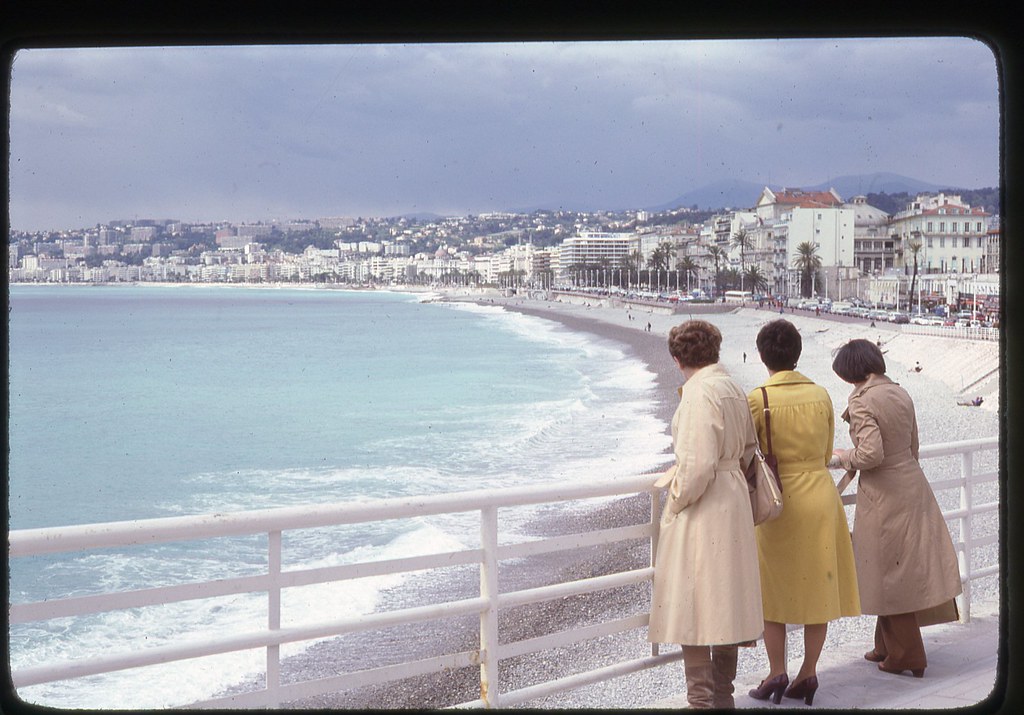
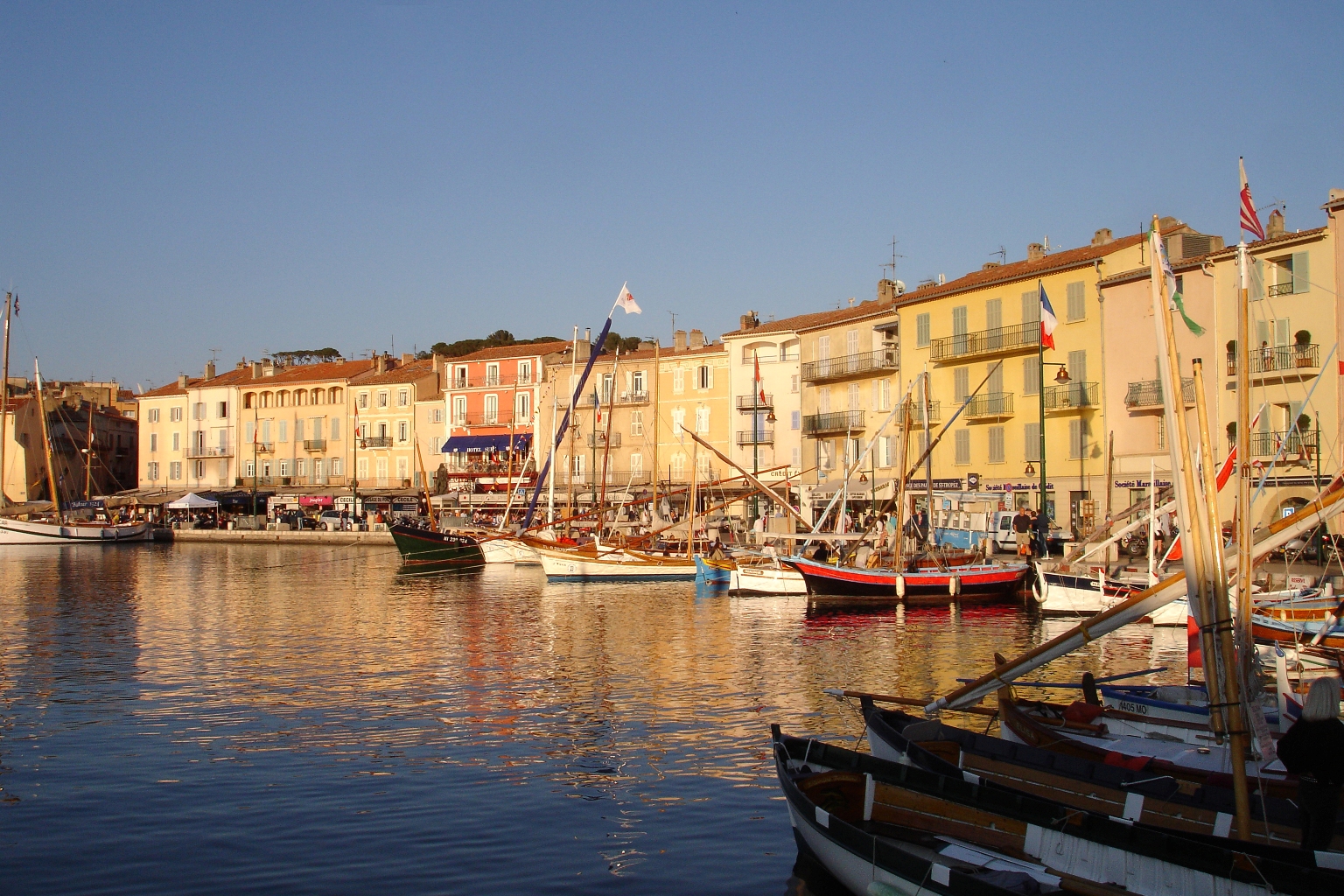
St.Tropez spy-noir

* I wrote this as a set-up for a solo-game i am running in Modern AGE by Green Ronin. So far i've run about a single "session" (a somewhat arbitary term in solo games). I think the spy-genre is a great for solo (or duet) games as the focus usually is on a single character anyway. Pushing that character to it's limits and reflecting on moral choices also feels safer in a solo enviroment. I'm sure it looses some elements that a group could provide, but provides opportunity for some self-reflexion which is not always available in role-playing games. 


St. Tropez in the 1970s. Haunted by celebrity and decadence. The nightlife is exciting, beaches are full with the bold and the beautiful. 

Money flows fast. Drugs are everywhere. Everyone gets laid.

In this world crime is also rife. The corsicans run the underside of the glitz. Gangsters are popular figures in the imagination of the young bon vivants. But underneath their glamorous exterior the underworld is ruled by money and guns.

The world around is changing. Superpowers are jockeying for power. Spies and turncoats are everywhere. The riviera is a prime location for exchanges and honeytraps.

JaneArt / CC BY-SA
Background

In the autumn of 1976 the french banker Christophe Lallemand is gunned down by persons unknown on his way to La Croix Valmer. The police investigation finds evidence that someone was in the car with M. Lallemand, but the investigation is halted after a few weeks.

In London MI6 commander Sebastian Bristol suspects that Russian intelligence might be involved in the case. M. Lallemand was an MI6 asset and his last report mentions that he has met a young woman named Lily Bonin. Bristol thinks Bonin might have been in the car with him. He goes to St. Tropez in an attempt to find the girl, but he also goes missing after filing a single report.

Commander Bristol’s wife Marcia Bristol is in the US working for the UN, but has secretly been recruited by the CIA. When her husband goes missing she contacts a friend in the Agency and begs them to look into her husband’s disappearance.

The CIA agent Howard Feldman is sent to England to liaison with the MI6. The CIA has knowledge that a prominent St. Tropez gangster, Yanis Mignot, might be working for the Russians. Commander Bristol report mentions that Ms. Bonin and M. Mignot knows each other, and his report contains a picture of them together.

Together with french MI6 agent Ava Baudet, Feldman recruits a french-american girl studying in England. M. Mignot is a prominent part of St.Tropez nightlife and is known to surround himself with beautiful women. A honeytrap is set for the french gangster.

Friday, April 10, 2020

Blog necromancy

Well, hello there...
I don't seem to remember owning a blog...

Ah... i'l cut the crap...

It has been a few years since i posted anything to this blog. I simply didn't have the energy or the time for it anymore in 2016. The stress of putting stuff out there on the internet was triggering my anxieties and left me depressed too much of the time. (And i'm a white cis (mostly) heterosexual male, so i don't have to deal with the bulls*it that marginalized folk do.)

I don't know if my situation is much better at this point, but i am feeling a genuine desire to blog about RPGs again.

And now the world is hit with this Covid-19 situation... 

I really love this hobby. I have realized as i went through a year (2019) that was filled with loss and greif, that my interest in role-playing games is really central to me. I'll be 38 this year and i've been playing RPG since i was 11. That is 27 years, a substantial portion of my life.

So in honor of a good friend and adventuring companion that ended his life in 2019 because the darkness inside became too much to bear.
...
And in honor of those friends that are with me in the loss and grief as we keep playing these games that we've played since childhood.
...
In honor of choosing my own way in life, and not letting others decide for me.
...
I will return to this blog. To write, occasionally and when moved, without fear.

Roll dice...

Monday, April 4, 2016

Easter Dungeon World play report

This easter i had the pleasure of running my first Dungeon World session.
Dungeon World is written by
Sage LaTorra and Adam Koebel.

The “powered by the apocalypse”-games have really sparked my curiosity over the last year and i was exited to it a try.
Games under the "powered by the apocalypse" umbrella seems to exist in that less-than-clearly defined space between traditional and more indie/freeform-type of games.
Not having run this kind of game with these particular players (some of my oldest friends) made last night feel, in a sense, like an expedition to uncharted territories. This is an account of what happened.
Omissions have been made to protect the innocent.

Adventurers three

They met in a tavern. Barbosar the Melancholic a dwarf barbarian cast out from his home for causing the death of his own father, the King under the Mountain, by elven assassins.

Ragnar, a fighter, had left his home village after it was destroyed by the warlord Pollax. His pregnant wife killed during the attack. Regrouping at the forest inn Ragnar plans to get his revenge.

The bard Baltazar the Bedazzeling, perhaps better known as the bastard of Blue Garden, was also run out his hometown after “having his way” with the Earl of Blue Garden’s daughter. Baltazar’s kryptonite is boredom and his cure is spurring his companions to unplanned action.

A bounty hunter and elf warriors

The adventure began when Barbosar approached the only newcomer at The Full Mug on a fateful moonlit evening. The newcomer turned out to be Falur, a bounty hunter from Blue Garden, seeking a price on Baltazar’s head and offering the dwarf great glory and wealth if he betrayed his comrade.

Using subterfuge(!) Barbosar stalled for time and alerted his companions. Not long after Falur found himself ambushed by the heroic trio in the stables of the inn. To save his skin Falur offered to tell the adventurers a secret.

When Falur had passed through a hamlet called Volderon’s Hollow he discovered that the wizard Volderon had abandoned his tower. Looting a wizard’s tower would be both profitable and glorious the heroes figured and decided to seek it out immediately.

Going to secure some important supplies beer from the innkeeper Raltvak, Barbosar finds that a party of elves have arrived at the inn. There is no love lost between Barbosar and the “Fair folk” and the indignant dwarf slaps Raltvak in the face before explaining to the innkeep how he feels about the pointy ears. The confrontation with the, possibly charmed, innkeeper escalates quickly with elven warriors rushing down the stairs of the inn.

Outside Baltazar and Ragnar have helped themselves to the elf band’s horses as Barbosar flees the inn. Elven arrows whistle by their ears, a few even strike true, as they make their escape towards Volderon’s Hollow with the elven warriors in pursuit.

Volderon’s Hollow

Arrving at Volderon Hollow the heroes encounter Gresham, a toothless old man, who seems to be last surviving villager. Gresham claims that ever since the wizard Volderon left his castle the villagers have been “eaten” by the shadows of the village.

Indeed as the heroes take a rest in Gresham’s hut they are attacked by a shadow creature which they fortunately manage to kill. After the figth they realize that Gresham is gone and they catch a glimpse of him running towards the abandoned wizard’s tower.

To the Tower…

The heroes rush into the tower crushing a pair of undead minions as they search for Gresham. He is easily found, as his mad howls to his master lead the heroes to a castle hall with a strange black gate covering most of the wall. When wicked flying shadow vultures burst from the gate and skeletal archers kill the tragic Gresham the heroes find themselves in a desperate battle.

Heroes, however, are want to prevail. They destroy the skeleton archers and drive the nightwings back into the black gate.

As they search the goods that Gresham have accumulated in the hall in an attempt to placate the entity beyond the darkness, Baltazar discovers that the old man still draws breath. With his dying words Gresham inform them that Volderon is captured beyond the black gate.

Then, in a somewhat stunning reversal of motivations, the three heroes decide to leap into the shadow void to rescue the wizard Volderon.

Into the void

Me being a TuffBoy preparing for the session.
Enveloped in utter darkness the heroes encounter the Lord of Shadow who, reasonably enough, inquires as to why they are in his realm. The heroes explain their presence and inquire about what they will have to do to escape the Shadow-realm.

It was a rather faustian deal.

However, seeing no other way, the heroes take it. Leaving the Shadow Realm, alongside the wizard Volderon, they are all bound to the service of the demon lord.

Good fun was had by all.

Monday, February 22, 2016

Worlds of the Alba system: Novus Albion

The Alba system is a small Stars Without Number setting i'm presenting on this blog.


The primary planet in the Alba system is Novus Albion.

Novus Albion

The largest planet of the Alba system is a temperate world, rich in water and reminiscent of Old Terra in many ways.

A vast agricultural continent stretches on both sides of the equatorial line, like a belt between the water covered poles of the planet. This belt also settles much of the planetary population in farming towns and smaller towns.

In addition to foodstuffs, there are large mineral deposits on the planet as well.

Population

Total population reach several millions. Humans comprise about 60% with the rest being the native Shisa.

Tech level and society

Tech level on Novus Albion is 4, with a few specialties like hydroponics and agricultural science.

Like all the Alba worlds Novus Albion society is ambitious and honorable, but Novus Albion is somewhat more conformist that Novus Victoria and Novus Virginia.
Pastoral life on Novus Albion

Religion and politics

Religious life on Novus Albion is dominated by Marian Catholicism. Most parish priests are women with the men serving a handful of monastery orders dedicated to the saints.

Among the elites of Novus Albion there is conflict between those that maintain isolationist policies and those that advocate seeking interstellar contacts. Due to the continuing Civil War the isolationists have thus far won out, but the continued de-escalation of that conflict might shift the political winds.

New Camelot

New Camelot is both the planetary capital and the spaceport. It is located on a foggy island north of the main continent. Control with peripheral settlements on the planet is accordingly weak.
One of many spaceport bars in New Camelot

The spaceport on Novus Albion is the only full spaceport in the system.

The Civil War left much of New Camelot in ruins after bombardments. Its architecture is now a mishmash of neo-victorian remnants from Old Terra and newer functional buildings of steel and glass.

Poverty and crime exists in New Camelot, most prominently at the spaceport where workers and refugees from the other Alban worlds seek a livelihood. Policing of the spaceport is weak since security resources are usually spent protecting governmental installations from Black Brigade-terrorists.

Sunday, February 21, 2016

Aliens of the Alba System

Aslans

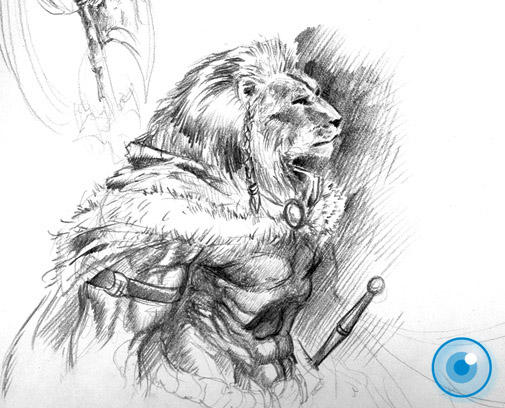
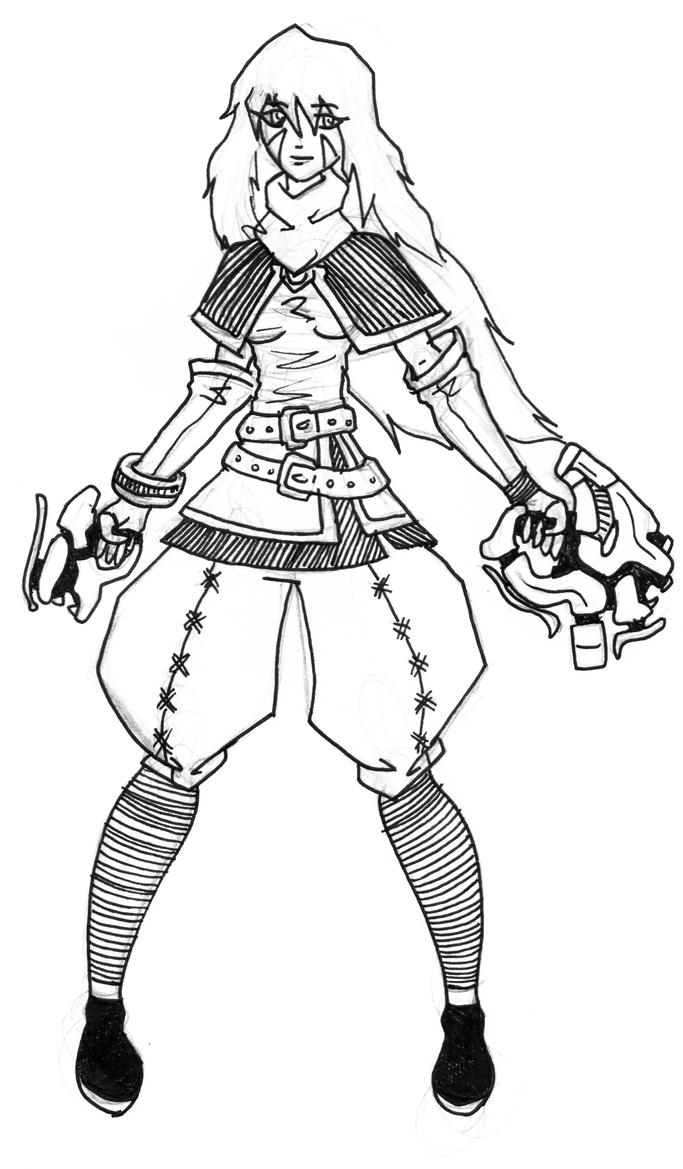
Lion Warrior by Demarcos
The Shisa are lion-like bipedal humanoids. They populated Novus Albion before the humans arrived but their medieval technology level was no match for the First settlers and the Shisa were quickly pacified.

The Shisa have about the same height and weight measures as humans. They have a slightly longer lifespan, up to 140 years, but reach sexual maturity after only six or seven years.

In the centuries since they have either lived on closely observed reservations maintaining their traditional way of life or have served as slaves for affluent humans. Lately Shisa have regained some of their position on Novus Albion, but many Shisa are hesitant of becoming to integrated with a human society viewed as too technologically focused.

Honor and tradition are very important to the Shisa. Their society is democratic and democratic participation is tied with honor. Breaking the trust of the community are one of the worst sins in Shisa communities.

Shisa architecture is dominated by a fascination for stone circles and pagoda-like structures. Their dress is reminiscent of Asian cultures on earth and so is their expertise in sword-making. This art form almost died out during the first years of slavery, but swords have lately become fashionable among the elites of New Camelot.


The Alba system Shisa are inspired by the Aslan-race from Traveller and the Rakasta from the D&D module Rage of the Rakasta.

Pechs

These green-greyish humanoid bipeds live mainly underground on both Novus Virginia and Novus Victoria, but on Victoria they are believed to be close to extinction.

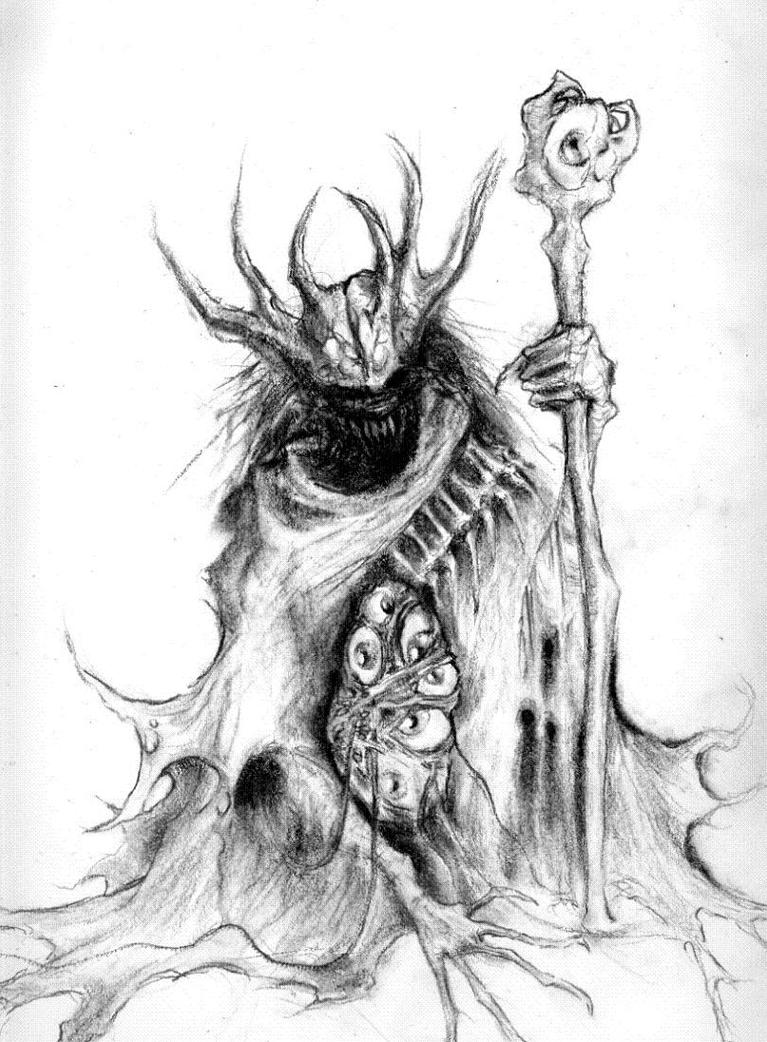
Pechs have large heads and large eyes on top of spindly bodies. They are species of sentient fungoid and don’t have a circulatory system. Pechs have a single sex and reproduce by planting spores into decaying plant or animal remains.

Goblin Necromancer by NetherRealm
Growing conditions are important to pech size and lifespan. Most pechs are between 0.9 and 1.2 meters tall with a mass of about 20 kilograms, but smaller versions (even under 0.3 meters) have been encountered and the largest pechs observed have been over 2.5 meters tall with a mass of around 150 kilograms.

Pechs have developed crude steam technology used primarily for mining and warfare purposes. Still they do not pose much of a serious threat to the human colonial populations on their home worlds. However, occasional abductions and subsequent ritual murder of people and livestock, for the purpose of growing new Pechs, have made them both feared and hated by the humans.

The fact that such a low-technology species appears on two planets have continued to puzzle the science community of the Alba system. No definite answer has been given, but in popular media theories of an ancient space-faring race moving the Pechs from one planet to another have grown popular despite the lack of evidence.

Pechs are inspired by the standard D&D goblins with a steampunk twist and the "get out of the way peck!" line from the movie Willow (1988).

Wednesday, January 20, 2016

History of the Alba System

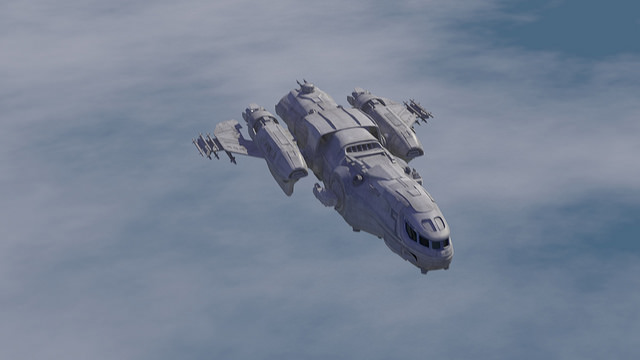
A starship flying over a cloud covered planet
The Alba Sector's history of Civil War has almost depleted the
fleets of the Queen of Alba and the Republic of Novus Victoria.
I developed the Alba-sector setting for a one-shot Christmas game of Stars Without Number.

As the setting for a one-shot i went somewhat overboard, but that means more blog posts.


I will start with some history for the Alba system.

Settling the system

The Alba System was settled late in first wave of humanity’s expanse into the stars.

Its primary settlers were born on the British Isles and the first city founded on Novus Albion was named New Camelot. The second and third habitable planets of the system were named Novus Virginia and Victoria.

A unique system with three human miscible and rich planets the Alba star- system grew quickly into an important trade hub after the indigenous alien races, the Shisa and the Pechs, were pacified.

The construction of a jump gate in 2320 solidified the system’s economic standing.

The ruling oligarchy of First settlers kept immigration to a minimum and developed a stratified social system support their own economic dominance, but still allowing later rounds of settlers to prosper.

The Scream

Following the Scream the Alba systems economy faltered as their interstellar connections disappeared. The First settlers tightened control over resources at first, courting an uprising of the lover classes, but in 2695 Genevieve “Ginny” Rassendyll, the President of the First Council, opposes the First Council’s policies by refusing to sign legislation that would condemn both Third settlers and the Shisa minority to extreme poverty and possibly starvation.

After this President Ginny continues to push liberal agendas, ensuring cooperation by all classes in maintaining economic safety and social order for all inhabitants. She even included policies that would give the Shisa full citizenship and remove settler status or species as requirements to hold public offices.

A faction led by Count Dennis Victor, commander of the Albion Defense Fleet, from Novus Victoria tried to oust the President in a coup in 2699, but were stopped by the Albion Constabulary Forces in a firefight inside the Council Palace itself. The incident left Count Victor himself dead and his faction in disarray. Following the Count’s death his daughter Beatrice Victor, commander of the ADF cruiser “Belfast”, ordered an all-out air strike on the New Camelot spaceport nearly crippling it before she returned to Novus Victoria.

Civil War

Civil War within the Alba system was now a fact and on Novus Victoria Beatrice declared herself president and denounced the First Council on Novus Albion. In a somewhat surprising move Ginny Rassendyll declared herself Queen of the Alba system and the First Council instituted a monarchy after a hastily organized referendum.

After about five months Novus Virginia also recognized Queen Genevieve following an armed uprising instigated by the Victorian government. Although the instigators and some of the leaders of the uprising were executed, while others were imprisoned, many with Victorian sympathies were allowed to leave Novus Virgina.

The first year of fighting saw the decimated Albion fleet repel three invasion attempts by the Victorians. Both sides had lost much of their fleets and the space war was reduced to defensive posturing.

Groups loyal to the opposing side on both planets formed irregular military units that fought ground wars with the local forces. The Albion loyalist militia on Novus Victoria was the most successful and threatened Capitol City at one point. This success prompted the first cease fire and negotiations between the sides in 2702.

Although negotiations put an end to planetside warfare it left the larger issues unresolved. Both sides claim the right to rule and have not been reconciled over the centuries. The sides have continually been in a state war since 2699, but active warfare has only been occasional.

The current state of affairs

There is a continual defensive posturing of space fleets. Most interstellar ships were destroyed during the first bombardment and early fighting. The Victorians only have access to a handful of spike drive ships, the Albions only a few more. The system frigates and fighters exchange torpedo fire from time to time, but there is no real space war between the two sides.

Both governments have adopted isolationist policies and have funneled resources into building defensive systems against the other side. Exploration of the region surrounding Alba is limited to a couple of systems.

On Novus Albion the isolationists have been challenged by a growing movement that supports more interstellar exploration. It is rumored that this movement has gained support from royal circles lately, but this is unconfirmed.

Proxy- and low-intensity warfare have been conducted by both sides. Espionage and industrial sabotage operations are the most common.

The Victorian sponsored Black Brigade have been the most active on Novus Albion the last decade.

The Victorians have been blamed for an attack by Hochog mercenaries on Novus Virgina, although they deny the charge. There have also been terror attacks, usually bombings, on New Camelot which have caused tensions between the government in Capitol City and the monarchs of Novus Albion.

Monday, January 4, 2016

Top five of 2015

I began this blog one year ago. Posting has been sporadic, but it has been fun. Looking at the posts that i know people read and interacted with is certainly good.

So i have looked at the stats (page views, interactions and such) and these are the top five Realm of Melpomene posts of 2015!

Top five posts of the Realm
I rolled a lot of D&D 5e dice in 2015!

Writing about D&D 5th edition was the thing to do in 2015 i guess.

The future of the Realm

I will keep the blog going in 2016. It probably won't be updated any more than once a month unless i suddenly find myself with a lot more time on my hands.

Is there anything you would like to see on the blog? Please leave a comment on the blog or talk to me on Google+

I wish you all good times and happy gaming in 2016!


Tuesday, December 22, 2015

Looking at Unholy Land for (He)X-Mas

Over at Worlds Without Master the Epimas bundle sale is still going. Bundles of indie tabletop role playing games and supplements available until the morning of the 24th of December (so hurry!).

In the mix of exiting games Unholy Land - An Ahistorical Hex-Mas Crawl for Mid-Level Characers, which is a bona fide OSR offering, appears.

(I was a bit surprised, the Indie RPG-scene and the OSR (the OSR also being indie, but possibly not "a scene") at times seem to exist in parallel universes, hermetically sealed from one another. Although the number of people with the necessary universe-transcending powers seem to be growing. Hopefully)

Product

"Bethlehem" from Mead Clarkes
Christian Parlor Magazine Vol III (1847).
Similar art is used in Unholy Night
The Unholy Land hexcrawl by Casey Garske is a 26-page PDF of which there are 23 pages of game material. The cover and hexmap are in color while the rest of the PDF is black-and-white.

It is a single column layout with what appears to be mostly public domain artwork from medieval sources.

Illustrations range from a depiction of the mummified head of Ramses the Great to old book-style illustrations of the town of Bethlehem.

Content

Unholy Land quickly (one page) sets the scene for the hexcrawl. In short we are in Roman Judea in 2 BCE and things are going down. King Herod fears the birth of child destined to bring about his downfall, but even weirder things are afoot with the undead rising, monsters of legend reappearing and demonic forces on the move.

On top of it all a star, visible to the naked, eye moves from east to west in the heavens astounding astronomers and sages alike.

After the scene is set we are given tools. A load of encounter tables for different types of foes. There are also tables for random village encounters and a specific Jerusalem encounter table. Most encounters are somewhat fleshed out with a line or even a paragraph to guide the DM. A table of rumors and prophecies guide the player characters into the hexcrawl.

The three magi on their journey to Bethlehem
The three magi appears in
Unholy Night
The hex descriptions are short and clear rather than evocative. They range from cultist seeking sacrifice to the PCs possibly allying themselves with an undead army.

Some hex locations describe encounters that will move around the map as time progresses in the game. Not all the encounters are tied together however so there are multiple potential emerging stories depending on the players actions.

At the end there is a bestiary for both NPCs and monsters. Stats are minimal and in a basic OSR format. (The damage levels makes me think the stats are AD&D inspired, but i could be wrong)

Judgement

I liked reading Unholy Land and i think i would enjoy running it immensely for the right group of players.

My one criticism is that there is no guidance, not even a single line, about what kind of PC's might be suited for the game. A band of Judean rebels? Roman soldiers on leave trying to earn some extra gold on the side? Time travelers? Anything would be possible, but it requires some work up front for the DM and players to decide. Of course, this is not necessarily a negative.

Monday, October 19, 2015

A "Deviant Decade" - 1970's roleplaying

The cover of Deviant Decade
I played a quick session of John M Stater’s recently released 70’s B-movie inspired game “Deviant
Decade” last night and that spurred me to write an impromptu review and share some of my fascination for the 70’s with my readers.

First, I will say a few words about my personal take on the deviant decade itself, then go on to the game.

It came from the 70s


My life experience does not include the 70’s. I was born in the early eighties, but for a time now, I have held a fascination with 70s history and culture.

On a very personal level, I think the fascination with the 70s grew from the fact that it was when the time my parents were in their 20s. Looking back at my own life I found that the years between age 19 and 29 has changed me both profoundly and in ways I did not expect.  My parents went through those years in the 70s with everything that entails from the Cold War to bell-bottoms. It must have been something.

Gay rights demonstration in 1976
(Photo: public domain)
Then there is the fact that much of the popular culture that I love and many of the social movements that have affected me grew out of 70s. Stanley Kubrick’s “A clockwork orange”, 2nd-wave feminism, John Pertwee’s Doctor Who, the resurgence of sword-and-sorcery, sexual liberation, counterculture, exploitation-cinema (which existed earlier but was transformed in the 70’s), the New Left, heavy metal, the deinstitutionalization of psychiatric care and last, but not least, the creation of Dungeons & Dragons.

Roleplaying itself, to me, is a child of the 70s whether it is Gary Gygax and Dave Arneson’s creation of D&D in ‘74 or the founding of the Loose Moose Theatre in Calgary in ’77 you trace its origins by. Both genealogies of the hobby just proves that there were many good ideas to come out of the “Deviant Decade”.

About the game


John M Stater, who runs the Land of Nod-blog, makes games with a decidedly old school bent. “Deviant Decade” is no different, with simple minimalist rules, character classes and freeform objective design meant to challenge player skill and focus on the emergent, as opposed to the pre-planned, story.

Deviant Decade is a 34-page black and white PDF product of which 31 pages is actual game content. There are a few public domain images throughout and a half-page overview map of New York city with 10 marked locations, but no descriptions of the locations.

The short introduction sets the game in the crime-ridden big city streets of the 1970’s stating that the characters are larger-than-life survivors of these streets.

Character generation, skills and stuff

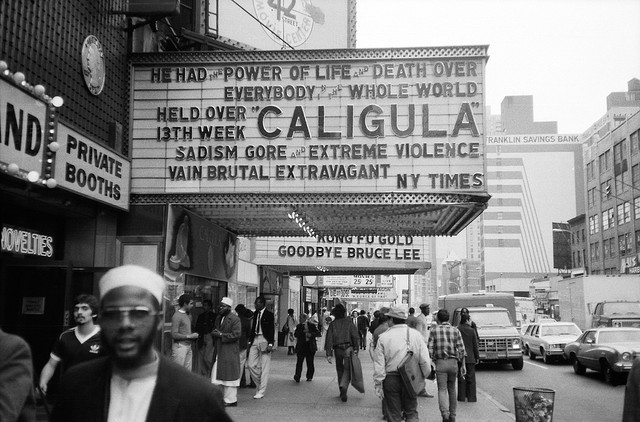
GM: "You went to see Caligula and it made you hungry for
even more decadent entertaiment. What do you do?"
(Photo: vaticanus, CC BY 2.0)

The game moves quickly through character generation. Seven ability scores rates from one to six and rolled with seven d6 rolls that the player can assign to which ability he chooses. The players then choose from 14 classes ranging from the Average Joe through the Night Nurse to the Vietnam Veteran.

Classes list the primary and secondary skills for the characters with tertiary skills chosen freely by the player. Starting skill scores are determined randomly with primary skills having the best chance of a high starting score. PC get seven skills total, one primary, three secondary and tertiary. Skills are ranked from zero to twelve, but starting values are no higher than six.

There are also a table of weapons and a short list of other 1970’s appropriate items with prices.

Mechanics and the lack of advancement


The resolution mechanic is a 3d6 roll under skill + ability score + modifiers in the -2 to +2 range. A few skill descriptions indicate a variable difficulty using 2d6 for easier tasks and 4d6 for harder tasks. Given that 12 is the maximum skill+ability score for a starting character it makes it hard for players to see many successful rolls. The harshness of this is somewhat offset by an interesting Luck mechanic, but the game is still on hardcore (or maybe just old school) mode.

The game has no advancement rules.

Adventure oportunities and sewer gators


Graffiti covered undergroud and your chaaracter?
(Photo: NARA/public domain)
The adventures section provides five “adventure templates” with a small table for each to flesh out an adventure setting or opposition. The templates slants towards action and survival-horror adventures with or without supernatural opponents.

Following the adventures is the monster section with something like 40 “monsters” from bikers, cops and street punks to giant apes, sewer gators and vampires. There are pop-cultural references here that made me smile and the diversity supports a range of adventures.

Monsters also have levels to judge how hard a challenge they are, but given the lack of an advancement system for PC’s they all look very dangerous.

Hard times for teens in the 70s.
(Actress Eve Plumb in
Dawn: Portrait of a Teenage Runaway) 

My game last night


The game I ran last night was a spur of the moment idea with a single player and me as GM. I think we spent less than 30-minutes from the time we agreed to try Deviant Decade until we were actually playing a game where an exorcist priest was trawling the seedy parts of Bronx looking for a possibly demon-possessed teenage girl. 

The supernatural-thriller (ala The Exorcist/Rosemary’s Baby) with urban crawl-ish elements was a nice fit for the game. It was a blast playing this game!

As the game mechanics are hard and we were playing a one-shot I was greedy with calling for die rolls and lenient with granting positive modifiers when my player had good ideas (which she usually has). I think that is good GM advice when running Deviant Decade.

(Photo: NARA/public domain)

Your game?


Overall, I recommend this game, I recommend the 70s too even if I have not been there, but I did play this game. For $2.99 you get a functional, fun and easy game tailored to experience the grime, crime and decadence of the 70s city streets. Dig?


I would like to see an advancement system though (even if making one up would not be very hard).

Sunday, August 23, 2015

D&D 5th edition PayWhatYouWant reviews

My go-to game for the last six months have been 5th edition of Dungeons and Dragons. This has led me to look out for free or PayWhatYouWant supplements for the game from time to time. I just love the fact people make content available for the game and i want to support their efforts.

So i figured i would give my personal, yet reflected, opinions on some recent finds. These are three small products, either free or PWYW, all available from DriveThruRPG:

Never Ask Directions

Never Ask Directions is a sidetrek adventure by John "Ross" Rossomangno. It is intended for character levels 2-4. The PDF is 16 pages with the adventure taking about 11 pages.

When i saw the words sidetrek adventure i immediately remembered the sidetrek adventures i read in Dungeon Magazine. These short, "drop'em wherever", adventurers were always my favorites as a teenager since i spent a lot of time making my own adventures and never really desired to run multi-session adventures someone else had written. But i digress.

Not calling itself a sidetrek to camouflage a bare bones adventure setup Never Ask Directions is indeed a complete module. There are several suggested hooks and a simple but functional back story that provides a good rationale for the adventure.

Furthermore the adventure features three adventure locations, one new magical item and a few original NPC's. The author has even included a sidebar about how to use sidetrek adventures and provides ideas about how to build on the adventure after its completion.

The adventure itself is simple and straight forward as the plot moves the PC's through the adventure locations. Along the way the author has provided some guidance on how to handle adventuring parties that does not act as expected. These are guidelines and I am left the impression that the adventure won't feel like a railroad, but the linear plot will challenge a DM whose player's insist on acting contrary to the plot.

All in all Never Ask Directions feels like a satisfactory mini-adventure that would be very easy to drop into any campaign. It is well-crafted and complete, but linear and simple which can present a challenge to DM's not keen on railroading players. Still, I recomend picking it up and keeping it handy for that session when you really need a sidetrek adventure.

As a final note i want to add that Never Ask Directions reminds me, vaguely, of The Trouble with Mylvin Wimbly by Andrew McCray (originally printed in Dungeon magazine #5 and it was included in the norwegian translation of the Mentzer Red Box). However The Trouble with Mylvin Wimbly is basically a miniature hexcrawl yet still basically useable is an instant (8-page) adventure. I want more adventures like that.

NPC Codex

The NPC Codex by Dan Coleman is a collection of 13 NPC that can be dropped into your game. The PDF is 15 pages with 14 pages of game content.

As a DM i enjoy making and using colorful, rounded NPC's in my game. The NPC you get in the NPC Codex are just that. From a rowdy markswoman to an arrogant half-elven wizardess these NPC's are simple yet rounded and not one-dimensional. The power-level of the NPC's span the lower tier of play with a range of challenge ratings from ¼ to 5.

The author provides a concept, a physical description alongside personality, quirks and memorable features for all these NPC's alongside full game stats. The NPC's feel ready-to-use but there is also room to expand and adjust them to suit your own campaign. A "GM Tip" sidebar is also added to each NPC with suggestions on how to use them.

All the NPC are are illustrated. The art is by the author and the simple drawings are beautiful and evocative which really helps with the feel for each NPC.

I should point out though that the NPC presented in this product are all fairly likeable, so if you are specifically looking for a villain to use in your campaign you might have to look elsewhere.

All in all if you (like me) and your players like using fleshed-out NPC's in your game the NPC Codex is worth checking out for yourself and even buying at it's suggested price (and maybe even a little more).

Heirs of Desperation

Heirs of Desperation from Tabletop Terrors Publishing is a supplement designed to raise money to fight poverty in India. According to the creators all proceeds goes to a charity called the Hands of Freedom. I won't go further into the charity aspect of the product, except to say that I support the idea of using ones creative hobbies for charitable purposes.

The Heirs of Desperation purpose of alleviating poverty is also apparent in the product content. The PDF is 16 pages with about 11 pages of game content.

There are three sections focusing on three poverty-related real-world problems and how they might be employed as challenges in a fantasy game world. The problems are:

  • Water shortage
  • Hunger
  • Orphans

For each section there is a short introduction to the real-world problem, with links to external material to further educated the reader. Game related there is a monster thematically linked to each problem and a selection of six plot hooks (with a fantasy spin) related to each problem. At the end there is a vigilante NPC character that could be used to introduce these problems to the player characters.

I'll say right up front that i found the plot hooks the most useful. Their quality is variable, but several of them gave me enough instantly to begin planning or improvising an adventure. I like that the plot hooks are not one sentence, but actually short paragraphs which make them much more fleshed-out. I think even the poorer plot hooks could be very usable, but they will require a bit more work by the DM.

The monster are okay but not as clearly thematically linked to the real-world problem as the plot hooks. The monsters are illustrated by Gauntes and the illustrations are simple but i enjoyed them. It is a shame that there is some text missing at the bottom of page eight where, i assume, some information would be given on how to lift a curse that the hunger-themed monster imparts. Not a huge problem but a little annoying because it is also the monster i liked best (although the oprhan monster, the Dread Father, was scarier).

All in all i like Heirs of Desperation quite well. It is not awesome, but the plot hooks are useful and some of them are inspiring too. The monsters, while not very original, could also be good addition to a campaign.


Thursday, June 18, 2015

On a favorite RPG

Today the question of: “Which game is your favorite Rpg?” was raised in a Norwegian Facebook group that I help moderate.

It was a good question. It became even better when I found myself unable to answer it. Then I figured I had to answer that question at least.

So, here goes: Why am I unable to name my favorite (tabletop) Rpg?

Qualities of games

Design choice: Dice or cards?
How important is it to how we experience games?
To answer that question I try to think of some quality that would set a game aside in my mind. Is there something about the rules? Is there something appealing about the setting or the physical (or even electronic) product? Or is it some experience with a game? Maybe it was the first game (or the last) or the games I played with old friends or even someone I had a crush on?

When I mention all these things, one thing strikes me. The experience of a role-playing game, at least to my mind, is not easily reduced to any one quality, or even a simple set of qualities. The experience of a game is subjective, not objective, and the amount of variables is close to incalculable.

I realize this is not rocket science. These are known thoughts.

The personal factor

A personal (for me) account of a tangential factor in the experience of games comes from being a gamer with social anxiety issues. My anxieties when playing with people I am not very comfortable with is almost certain to interfere with my experience of the game. So given the right context my anxiety issues are going to be a large factor in how I experience a game.

This is not rocket science either.

The community and the praxis of role-playing
The praxis of role-playing games
(photo By Diacritica CC BY-SA 3.0 via Wikimedia Commons)

My experience of the current gaming community, online and elsewhere, are that the discussions about game design, various ways of playing role-playing (it’s in the word really) games and about game content are popular, vocal and sometimes antagonistic.

Geeks like to argue I guess, but I wish there could be more humility about the fact that generating a positive and meaningful game experience happens at the table. Game design and content can probably help, but it is the praxis of role-playing at the table that will determine the experience.

(I’m not going to touch on how this also relates to the ever-present debate about inclusivity in the gaming hobby, but I guess anyone reading this will be able to discern my opinion)

The award does not go to...

So, why can’t (won’t) I name my favorite Rpg?

Well, that award doesn’t go to any game, to any game designer or author. My favorite role-playing game is the game I play with my friends.

Tuesday, April 14, 2015

Star - Princess of the Federation

The spaceship Zodiac holds the remnants of the Federation after they had to flee their homeworld of Æonia. The Federation was the leading power in an alliance of good planets that valued freedom, friendship and law.

Æonia was destroyed in a surprise attack by the Directorate, under the evil leadership of Director Orthotron.

Star is a young princess of the Federation thrust into a leadership role as the spaceship Zodiac travels through space in search of home. On their way they encounter dangerous space pirates, strange alien cultures and must always look out for their archenemy – the Directorate and it's droid forces.

Sci-fi Princess Nori by Angryspacecrab (CC-BY.3.0)
Star is, luckily, not without helpers. Commanding the Zodiac's bridge is Captain Baker, a stern and brave woman with effective control of her subordinates. In the ships hospital wing the eccentric doctor Egold Brookson cures disease and advocates for peace in a universe hellbent on war. Star's private teacher is Mrs. Mason, a widower with a heart of gold, warm tea and an infinite amount of homespun wisdom to share.

With all these allies what could a princess want?

Of course... There is also young federation cadet Brusse Jenkin, a young man just as confused and just as brave as the princess. Will Star and Brusse find their way through the galaxy? Can they escape the evil Director, or defeat the vicious Space Pirate Queen Lustria and can they trust the trust the mysterious light beings called the Archons?

Thursday, March 12, 2015

The music in my games

Music is an important inspirational tool in my gaming. I listen to music when i write stuff, i listen to music when i play games and when i listen to music my drifts into those imaginary realms that are such a big part of my life.

Following is a selection of music that connects me to the realms of my imagination. Feel free to supplement with your own in the comments section.

Steeleye Span - Seven Hundred Elves

Play D&D for a long time and you are bound to become ambivalent towards the tolkienesque elves of the vanilla settings. British folk rock band Steeleye Span hearkens back the elves of mythology, "(...) foul and grim they were", in this song lending them some much needed authenticity. 

Blood Ceremony - The Great God Pan

I can never get enough of heavy brooding metal, mythological references and stunning female vocals.

Blood Ceremony was actually recommended to me by Jefferey Talanian of North Wind Adventures who has created Astonishing Swordsmen & Sorcerers of Hyperborea the retro-clone that really opened my eyes to the OSR. Encounters with dark satyrs are bound to crop up in my games.

(This live video contains a bit of "concert atmosphere" before the song starts)


Ozzy Osbourne - Old LA tonight

This song was sort of special to me back in my teens when we played Kult and swedish cyberpunk/euro tech-thriller game Neotech (the 1st edition, 2nd was crap).

It was a great time. Our characters were typically based on Predator comics character Detective Schafer and some of them looked like Lorenzo Lamas on Renegade.

The combination of melancholy and action-movie aesthetics was very moving to my angsty teenage self and it still gets me every time.

Frederick Curzon - Robin Hood Suite

Not everything needs to be rock and roll. Curzon's Robin Hood Suite feels like that Robin Hood movie with Errol Flynn, a movie that took my mind to other places long before i even knew what fantasy was. (I've always wanted a PC that looks like Errol Flynn, why haven't done that?). Enjoy!


Hawkwind - Chronicle of the Black Sword

I don't think i need to explain this. Hawkwind and Moorcock's collaboration on giving the saga of Elric the Melniboné a musical expression is just awesome. It is the audio expression of so much of the inner landscape I've been playing in since childhood.

My personal favorite on the album is probably "Needle Gun" though which always makes me think of fletchette-gun toting original razor girl Molly Millions from William Gibson's Neuromancer. (Although I'm aware that it is supposed to reference Moorcock's character Jerry Cornelius).


There is a live concert movie with the songs from Chronicle of the Black Sword available on YouTube. Including, if I'm not mistaken, Michael Moorcock himself.

p.s I usually use Spotify for listening to music so i added the albums where these songs can be found and few other treats of Norwegian fantasy inspired prog to a public spotify playlist.

Sunday, March 1, 2015

Nymph for 5e

Anders Zorn (1885)
The nymph is a creature that appears every so often in D&D. The first time was in the Blackmoor supplement in 1975 and after that in the 1st edition AD&D Monster Manual. In later editions, the nymph seems to have lost popularity.

The nymph does not appear in the 5e Monster Manual and apparently didn't show up until Monster Manual III of the 4th edition (i have never played nor been a fan that edition).

So what is wrong with the Nymph?

Fighting beautiful forest women who really are somewhat nice, is not as motivating as taking out that beholder in those ruins over there. I get that. The Nymph is not really a «monster».

The fact that the fight might be a bit hard since you can go blind just looking at her and that you could even die if she happens to be naked is also a bit boring. A Nymph could end your character fast and probably without much fun.

Death by nudity is not just silly...

The death by nudity thing is troubling in terms of sexism as well. It reinforces the view that female sexuality is somehow dangerous, which again leads to the classic double standard about sex. The impossible demand that women should be both chaste and erotically available at the same time is a staple of how many cultures have controlled women.

It also robs the Nymph, as a character, of so much agency. If she is to avoid causing blindness (or death) to those around her, she has to stay hidden and out of the way. (I am aware that some editions have stated that a Nymph can suppress these abilities, which makes it better, but the point still stands)

But I like Nymphs

I like having strange, powerful and erotic forest women as monsters/NPC's in my campaigns. Nevertheless, i want them to be a less silly and more interesting as an ally or patron to the characters.

So what do i do? I make my own Nymph:

Nymph

Medium fey, chaotic good
Armor Class: 11
Hit Points: 154 (28d8+28)
Speed:
STR 10 (+0) DEX 12 (+1) CON 12 (+1) INT 16 (+3) WIS 20 (+5) CHA 28 (+9)
Skills: Deception +13, Insight +9, Nature +7, Perception +9, Stealth +5
Damage immuities: Acid, Poison
Damage resistances: Bludgeoning, Piercing, Slashing
Senses: darkvision 60ft., passive Perception 19
Languages: Elvish, Sylvan
Challenge: 11 (7,200)

Blinding beauty: The nymph's otherworldly beauty makes attacks against them hard. Creatures attacking a nymph must make a DC 21 Charisma saving throw or have disadvantage on their attacks.

Spellcasting: The nymph is a 7th-level spellcaster. Her spellcasting ability is Wisdom (spell save DC 17, +9 to hit with spell attacks).

  • Cantrips (at will): Druidcraft, Guidance, Thorn Whip
  • 1st Level (4 slots): Entangle, Faerie Fire, Fog Cloud, Healing Word
  • 2nd Level (3 slots): Barkskin, Gust of Wind, Hold Person
  • 3rd Level (3 slots): Call Lightning, Conjure Animals, Wind Wall
  • 4th Level (1 slot): Confusion

Actions

Improvised Club. Melee Weapon Attack: +1 to Hit, reach 5ft., one creature. Hit: 2 (1d4) bludgeoning damage.

Change Shape. A Nymph can use her action to magically polymorph into a beast with a challenge rating no higher than its own, or back into its true form.

In the new form, the nymph retains its alignment, hit points, Hit Dice, proficiencies, lair actions, and Intelligence, Wisdom and Charisma scores as well as this action. Any other statistics and capabilities are replaced by those of the new form, except any class features or legendary actions of that form.

Fey charm. The nymph targets one humanoid or beast within 30 feet of her. If the target can see the nymph, it must succeed on a DC 21 Wisdom saving throw or be magically charmed. The charmed creature regards the nymph as a trusted friend to be heeded and protected. Although the target is not under control of the nymph, it takes nymph's actions or requests in the most favorable way it can.

Each time the nymph or its allies do anything harmful to the target, it can repeat the saving throw, ending the effect itself on a success. Otherwise, the effects lasts 24 hours or until the nymph dies, is on a different plane of existence from the target, or ends the effect as a bonus action. If the target's saving throw is successful, the target is immune to the nymphs Fey Charm for the next 24 hours.

The nymph can have no more than one humanoid, but any number of beasts, charmed at a time.
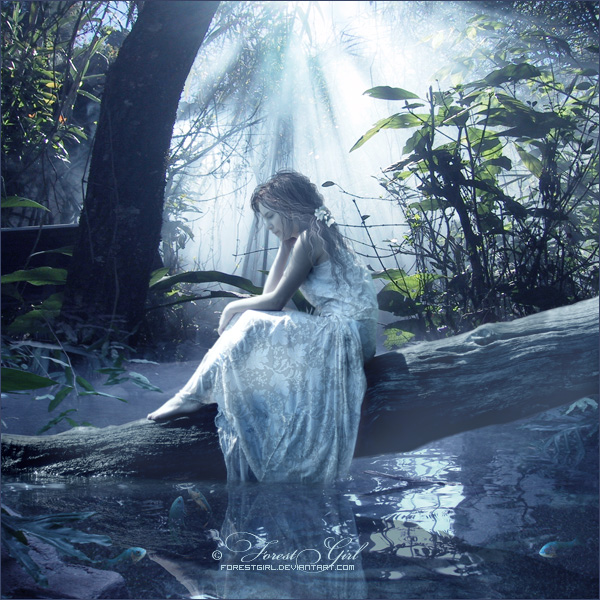
Soltice Night by Forest Girl at deviantart (CC BY-NC-ND 3.0)

Nymph lairs

Nymph lairs are beautiful natural places. Deep forest groves or spacious natural caves covered in rich moss. Water is always present in a nymph’s lair. A deep pool, a hole in a flowing river or a trickling silvery brook.

It is common to find animals inside or close to a nymph lair. Assume there is at least two beasts of challenge rating 1 or lower near a nymph lair at any time.

Other fey also usually flock to nymph lairs. Pixies, Blink dogs and Sprites are all common. Nymphs take Satyr lovers from time to time as well.

Lair actions:

On initiative count 20 (losing ties), the nymph takes a lair action to cause one of the following effects:
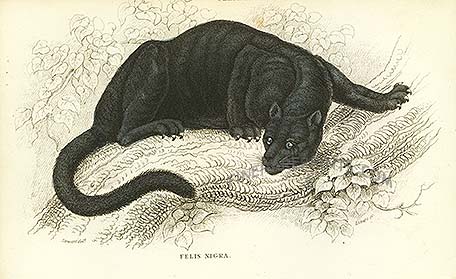
Black Puma by Lizars Mariomassone
  • Can cause any intruder into her lair to go blind. The creature is allowed a DC 17 Constitution saving throw to avoid this effect. This condition is removed normally.
  • Can cause any part of the ground, up to a 20-foot radius, in her lair to twist and sprout pikes and thorns. This area becomes difficult terrain and a creature moving into or within the area takes 2d4 piercing damage. The area is not camouflaged in any way.
  • Can conjure a vine that sprouts from the ground in an unoccupied space within the lair. This vine can lash out at a creature within 30 feet of it. The creature must make a DC 17 Dexterity saving throw or be pulled 20 feet towards the vine. The vine will restrain the creature until it succeeds on a DC 21 Strength (Athletics) check or is released by the nymph.
  • Can conjure one beast of challenge rating 1 or lower; or can conjure one fey of challenge rating ½ or lower.
Responses and constructive feedback are always welcome.
PS. after writing this i came across the suggestion in the Swords & Wizardry Monstrosities book that looking at a nymph could change someone into an animal. That is also very cool and i would probably add that power to my 5e nymph version.

Friday, February 20, 2015

Preparing X1 - The Isle of Dread

Cabin view including ski tracks.
This time of year for over fifteen years, I have retreated to mountain cabin in central Norway for four to five days of intense gaming.

Our yearly winter trip has become a fond tradition for me and my friends that now live scattered across Norway. Still we get together, almost all of us, every year.

We have run many different games over the years, but Warhammer FRP (1st and 2nd edition) have featured prominently with the occasional round of D&D, Kult (Swedish horror game) and EarthDawn.

This year we are going to do something that I have been looking forward to for a long time. Running one of my favorite modules: X1 The Isle of Dread by Tom Moldway and David Cook. I do not think I need to tell people why X1 is great, this great person has done so and this great person as well.

With my personal nostalgia out of the way, I will turn to how I have been preparing to run it.

I am using the module with D&D 5e, so there is something new as well as something traditional. I am also leaning on the play test version of the module as well as the original version (and even a Norwegian translation of the module from the Norwegian edition of the Mentzer Basic D&D Expert-rules, aka “BlĂ„boka” in Norwegian).

So how to prepare the sandbox?

Isle of Dread module-cover (1983 cover)
Well, the first thing to realize with a hexcrawl-type sandbox is that it is only a framework and that, as a DM, you have to create the details of, and connections between, the seeds that the sandbox gives you.

I have read somewhere (but I cannot remember the source) that a sandbox is about emergent stories.
Not the stories you, as a DM might want to tell, but the stories that you as players (the DM also being a player) find as you explore.

Sowing adventure seeds

Consequently, I have spent my prep time taking the seeds that are already in the module and trying to fill them with good stuff.

The first thing I did was hack the encounter tables. There are significant variations between the play test encounter tables and the original ones. I wanted to stay close to the original ones but I had to remove a few monsters because I did not have the time to convert them. Weighing the different results of an encounter table is also a fun exercise and it lets me prefer some encounters to others without implementing the quantum ogre.

The second thing I did was create rival NPC adventuring parties. This is not in the play test version, but the rival adventuring parties suggested in the original module are nice and I love making NPC parties. Now I have an evil band of adventurers looking for a temple, a neutral band of treasure hunters and a good pair of adventurers looking for a powerful fey.

The third was creating a web of relationships between the village chieftains, their witch doctors and war chiefs. I made a few choices and clarifications about how the villages and clans of the module interact. Adding some political intrigue to this module is exiting because the structure of clans in the villages opens up another level of complexity.

The last point was writing a paragraph of additional detail about the major encounters on the island. Detailing the current plans and some personality traits of the leaders of the isle have really made the island come alive.

Improvisation

Another reflection after preparing this module is that the loose structure is very useful for providing the DM with a room for improvisation without having to resort to railroading the players. In other words, the undefined parts of the module are actually the most exiting parts because it is where the players have room to unfold their ideas and plans (or schemes…)

I have made sure there is still enough room for those on the Isle of Dread.